Healthy Homes heating
Heat pumps for rentals, matched to the capacity your living room needs
The Healthy Homes heating standard sets a minimum heating capacity for the main living room of every rental. You work out that figure using the Tenancy Services tools. We install a heat pump with at least that heating capacity, wired and commissioned, and give you the product details for your records. We work with landlords and property managers across Auckland.
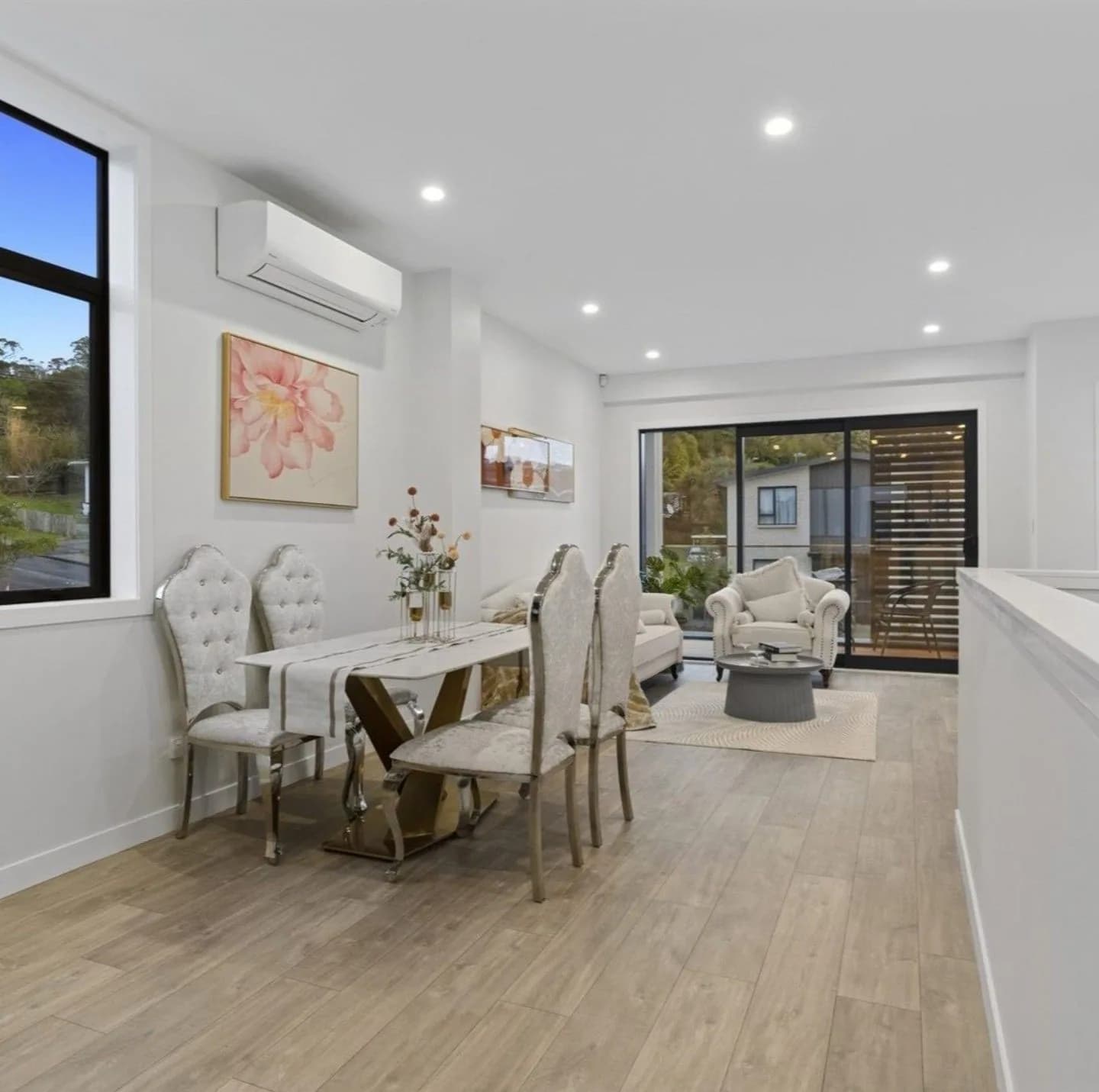
Heat pumps for rental properties, installed to the heating capacity your Tenancy Services assessment says the main living room needs.
Get a quote for rental heatingThe standard
The heating standard in brief
Tenancy Services sets out the heating standard in full. The key points for choosing a heater are:
There must be one or more fixed heaters that can directly heat the main living room. Tenancy Services defines the main living room as the largest room used for general, everyday living, such as a lounge, family room or dining room.
Heaters must be fixed, not portable, and at least 1.5 kW in heating capacity. If you use a heat pump or electric heater, it must have a thermostat. Open fires and unflued combustion heaters, such as portable LPG bottle heaters, do not qualify.
Electric heaters other than heat pumps are limited. If the required heating capacity for the main living room is over 2.4 kW, an electric heater that is not a heat pump cannot be used, except to top up qualifying heating installed before 1 July 2019.
Tenancy Services' compliance page states that from 1 July 2025 all private rentals must comply with the healthy homes standards, and that landlords must keep records showing how they comply.
Capacity
Heating capacity is not the same as power draw
The heating standard is about heating capacity: the amount of heat a heater delivers to the room, in kW. For a heat pump, that is the rated heating output on its specification sheet.
It is not the heat pump's electrical input, which is much lower because a heat pump moves heat rather than making it. EECA puts the average heat pump in New Zealand at three times more heat out than power consumed.
When you compare quotes, match the heat pump's rated heating capacity against the figure from your assessment. We show the model and its rated heating capacity on our quote so the comparison is easy.
Process
How we work with landlords and property managers
- STEP 01
You calculate the requirement
Use the Tenancy Services Heating Assessment Tool, or another recognised method, and send us the required heating capacity and report.
- STEP 02
Site visit
We check the main living room, a sensible position for the indoor unit, the outdoor unit location and the switchboard. Access can be arranged through your property manager.
- STEP 03
Recommendation and quote
We recommend a heat pump with at least the required heating capacity and a thermostat, positioned to heat the main living room directly, and quote including the electrical work.
- STEP 04
Installation
Indoor and outdoor units installed, pipework and drain run and covered, and the circuit wired back to the switchboard. If the board has no space or RCD protection for a new circuit, we explain what a switchboard upgrade involves before any work is done.
- STEP 05
Testing and commissioning
The system is tested and run in heating and cooling before we leave.
- STEP 06
Records
We give you the make, model and rated heating capacity of the installed unit and our invoice, for your Healthy Homes records.
Ready to quote
What to send us for a quick, accurate quote
- Your Heating Assessment Tool report or required heating capacity
- The property address and which room is the main living room
- Photos of the room and the outside wall behind the likely heat pump position
- Details of any existing heating in the room
- Tenant or property manager contact details for access
After installation
Keeping rental heating working
Servicing between tenancies
Manufacturers such as Mitsubishi Electric NZ recommend servicing residential heat pumps at least annually. Our heat pump servicing covers the coils, drains, filters and electrical connections.
Repairs when something goes wrong
If a tenant reports a fault, we can diagnose and quote the repair. See heat pump repairs.
Ventilation is a separate standard
Kitchen and bathroom extraction fall under the ventilation standard. See home ventilation for the extractor fan requirements, and our page for landlords and property managers for fans, smoke alarms and other electrical work in rentals.
Tenant guidance
A short explanation of the remote and filter cleaning at handover helps tenants run the heat pump properly and report problems early.
FAQ
Healthy Homes heating: common questions
Does a heat pump meet the Healthy Homes heating standard?
A heat pump can be an acceptable heater if it is fixed, has a thermostat, directly heats the main living room and has at least the heating capacity your assessment requires. Tenancy Services sets out the full rules on its heating standard page.
Can you tell me whether my rental complies?
No. We install heating; we do not assess or certify compliance. Use the Tenancy Services Heating Assessment Tool or another recognised method to work out the required heating capacity, and we will install a heat pump that meets that capacity.
What size heat pump does my rental need?
That depends on the required heating capacity for the main living room, which you calculate with the Tenancy Services tool or another recognised method. We then select a heat pump whose rated heating capacity is at least that figure. Our article on heat pumps and the Healthy Homes heating standard explains more.
Do I have to use a heat pump?
No. Other fixed heaters can qualify. But electric heaters other than heat pumps cannot be used if the required capacity is over 2.4 kW, except to top up qualifying heating installed before 1 July 2019. For most living rooms, a heat pump is the practical choice.
Which room needs the heater?
The main living room, which Tenancy Services defines as the largest room used for general, everyday living, such as a lounge, family room or dining room. The heater must be able to directly heat that room.
What records should I keep?
Tenancy Services says landlords must keep all records and documents that show how they comply with the healthy homes standards. For heating, that typically includes your heating assessment, the heater's make, model and rated heating capacity, and the installation invoice. We provide the product details and invoice.
Can you arrange access with my tenants?
Yes. Give us the tenant or property manager's contact details and we will arrange a time with them directly.
What customers say
5.0 from 47 Google reviewsCustomer reviews
“I have used Plexus Electrical for many years on projects from lighting, outdoor electrics, aircon and heating systems. Ryan and his team are great respectful, efficient and professional. Would highly recommend Plexus.”
“Super professional guys, did a number of jobs for us, from a single power point installation to rewiring entire room and installing new lights. Ryan is down to earth and straight to the point man, absolute pleasure to deal with. Heavily recommended.”
“We’ve been working with Ryan and his team at Plexus Electrical since 2016, and we can’t recommend him highly enough. Over the years, Ryan has consistently delivered exceptional service for our projects. He’s reliable, professional, and always brings a high level of expertise to every job. Whether it’s been smaller jobs or more complex work, he approaches everything with care and precision. It’s amazing having someone like Ryan as part of our trusted team. A true professional and a pleasure to work with!”
Get a quote for rental heating
Send us the required heating capacity from your assessment and the property details. We will recommend a heat pump that meets it and quote the full installation.
More on healthy homes heating
Keep exploring
Services and tools
Guides