
Landlords and property managers
Electrical work that keeps a rental safe, and the paperwork to show for it
A lot of what the tenancy rules ask of a rental is electrical work: smoke alarms, kitchen and bathroom extractor fans, and wiring and fittings that are safe for tenants to use. Plexus is a licensed and insured Auckland electrical contractor. We install and certify that work, check the installation between tenancies, and because we also install heat pumps, we can look after the heating standard in the same visit. We do the work; we do not assess or certify Healthy Homes compliance.
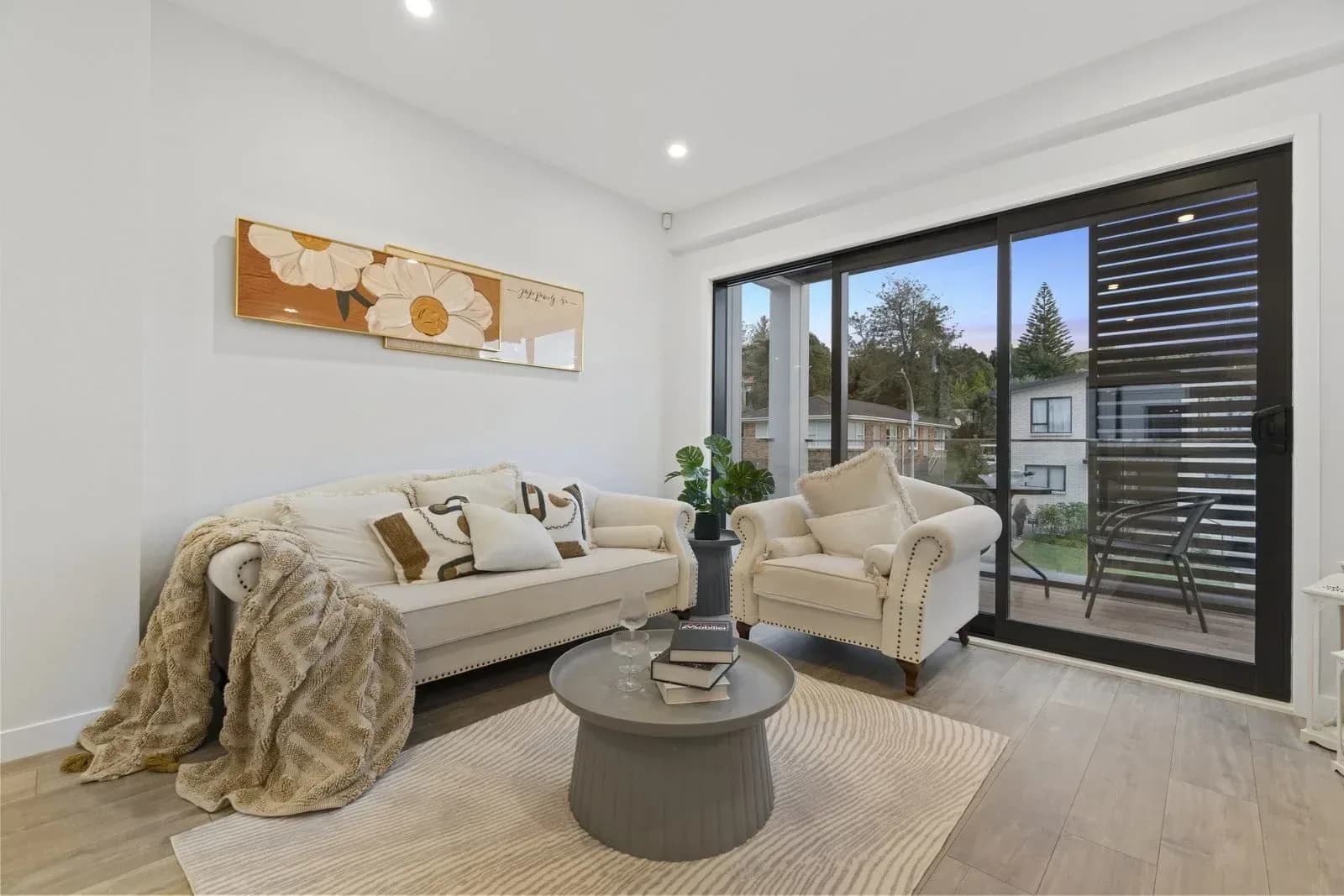
Agincourt development, North Shore
Smoke alarms, extractor fans, RCDs and electrical safety checks for Auckland rentals, plus heat pumps for the heating standard.
Get a quote for your rentalThe short version
Where electrical work fits in a rental
Tenancy Services says landlords must keep a property in a reasonable state of cleanliness and repair and meet all relevant building, health and safety standards (key rights and responsibilities). On top of that are specific rules for smoke alarms and the healthy homes standards, which from 1 July 2025 apply to all private rentals (healthy homes compliance).
The electrical parts of that are the ones on this page: smoke alarms, the extractor fans in the ventilation standard, the condition of the wiring, switchboard and RCD protection, and the circuit for any fixed heater. We start with the electrical work, then cover the heating.
Smoke alarms
Smoke alarms: the rental rules, and what we recommend
The rental rules are a minimum. Hardwired, interconnected alarms go further, and only an electrician can install them.
| Topic | Rental rules (minimum) | Best practice |
|---|---|---|
| Where | Within 3 metres of each bedroom door, or in every room where a person sleeps, and on each level of a multi-level home | Bedrooms, living spaces, hallways and landings, and every level, as in the new-build standard |
| Type | New alarms must be photoelectric with a battery life of at least eight years (most sold now are rated for ten), or be hard-wired | Photoelectric alarms, interconnected so that when one sounds, they all do |
| Power | Long-life battery or hard-wired | Hardwired with wired interconnection when ceilings are open; wireless interconnected alarms in finished homes |
| Condition | Working at the start of each new tenancy and in working order throughout it, installed to the manufacturer's instructions | Tested at every changeover, and replaced before the replacement date printed on the alarm |
Tenancy Services also says tenants must not damage, remove or disconnect a smoke alarm, must replace dead batteries in older alarms that have replaceable batteries, and must tell the landlord about any problem as soon as possible. Hard-wired systems must be maintained to the manufacturer's requirements.
Installing or replacing a hardwired alarm is electrical work for a licensed electrician. Our guide to hardwired vs battery smoke alarms sets out the rental rules, the new-build rules and interconnection in more detail.
Ventilation
Extractor fans under the Healthy Homes ventilation standard
The ventilation standard requires each kitchen and bathroom to have an extractor fan venting to the outside, or a continuous mechanical ventilation system that meets set criteria. Fitting and wiring a fan is electrical work.
| Room | What counts | Fans installed after 1 July 2019 | Fans installed before 1 July 2019 |
|---|---|---|---|
| Kitchen | Any room with a cooktop | Fan or rangehood with a minimum diameter (including ducting) of 150 mm, or an exhaust capacity of at least 50 litres per second | Must vent to the outside and be in good working order |
| Bathroom | Any room with a shower or bath | Fan with a minimum diameter (including ducting) of 120 mm, or an exhaust capacity of at least 25 litres per second | Must vent to the outside and be in good working order |
How we install rental extractor fans
Ducted to outside
Every fan and rangehood is ducted to a proper outlet through the roof or wall, never left to blow into the roof space.
Details in writing
Tenancy Services suggests landlords get the fan diameter, ducting and flow rate from the installer in writing. We put those details on our invoice.
Wired to be used
Fans can be wired to the light switch with a run-on timer, or to a humidity sensor, so they run when the room is in use.
Our home ventilation page covers extraction and whole-home ventilation in more depth, including why recirculating rangehoods do not remove moisture.
Between tenancies
An electrical safety check between tenancies
A changeover, with the property empty, is the easiest time to find out what condition the electrical installation is in. This is what our check covers.
- STEP 01
Switchboard
Condition of the board, signs of overheating or damage, what RCD protection is fitted, and whether the circuits are labelled.
- STEP 02
Outlets, switches and fittings
Cracked, loose, scorched or damaged fittings, and outdoor fittings exposed to the weather.
- STEP 03
Smoke alarms and fans
Smoke alarms tested and their replacement dates checked. Kitchen and bathroom fans checked to run and vent outside.
- STEP 04
Testing
Earth continuity, insulation resistance and polarity on the circuits, and RCD operation tests.
- STEP 05
Written findings
A plain summary of what we found, what should be fixed before the next tenant moves in, and what can be planned for later, with a quote for any remedial work.
Appliances you supply with the property, such as a dryer, dishwasher or portable heater, are covered by their own rule in the Electricity (Safety) Regulations 2010. Our testing and certification page explains how the regulations treat appliances supplied to tenants, and our test and tag service.
RCD protection
RCD protection in older rentals
An RCD (residual current device) switches a circuit off very quickly when it detects current leaking to earth, which is what happens when someone gets a shock. A circuit breaker does not do this. Many older Auckland homes have no RCD protection, or only partial protection added later.
For a rental, where you do not control what tenants plug in or where they use it, RCD protection across the power and lighting circuits is one of the most effective electrical safety improvements you can make. Our guide to RCD protection explains what RCDs do and how tenants can test them with the test button.
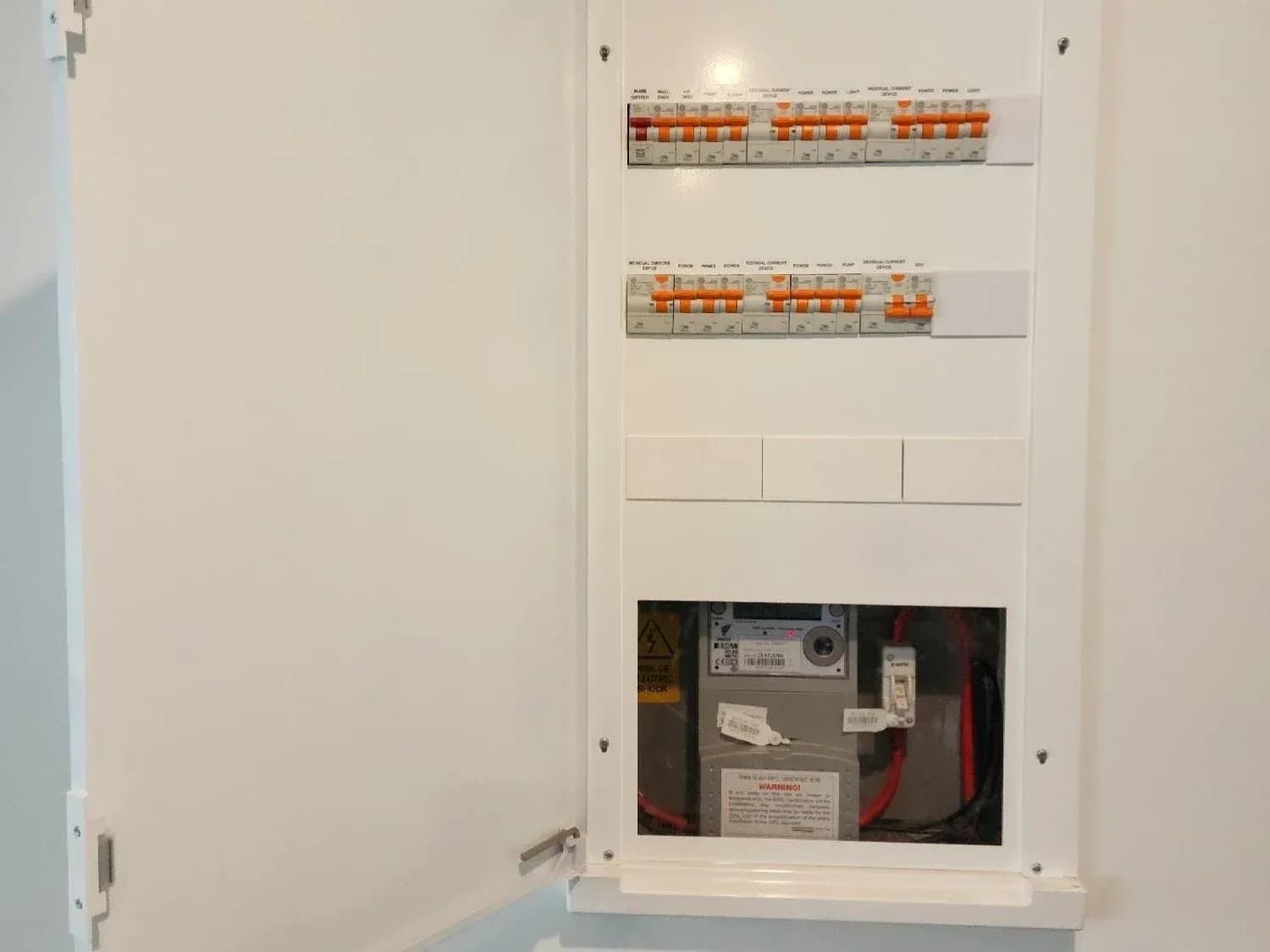
Switchboard and wiring
Signs the switchboard or wiring needs attention
None of these on its own means a rewire, but each is worth having checked before the next tenancy.
- Rewireable ceramic fuses rather than circuit breakers.
- No RCDs, or only one RCD covering a few circuits.
- Scorch marks, a burning smell, buzzing, or fittings that feel warm.
- Breakers that trip when several appliances run at once, or a tenant reporting repeated tripping.
- Old rubber or fabric-insulated cable visible at the board or in the roof space.
- Too few power points, so tenants rely on multi-boxes and extension leads.
- Labels missing or wrong at the switchboard.
See switchboard upgrades and rewiring for what each involves. If a board or circuit needs work, we will tell you what is a safety problem now and what can wait for a planned upgrade.
Heating and cooling too
Heat pumps for the Healthy Homes heating standard
The heating standard requires fixed heating that can directly heat the main living room, with at least the heating capacity your assessment calculates. You work out that figure with the Tenancy Services Heating Assessment Tool or another recognised method.
Plexus installs heat pumps as well as doing the electrical work, so the dedicated circuit, the switchboard and the heat pump itself are handled by one team. Our Healthy Homes heating page explains the heating standard, what to send us, and the records we provide.
Working with landlords and property managers
- STEP 01
Tell us the property and the job
A changeover check, smoke alarms, fans, a switchboard, a heat pump, or a list from your own inspection.
- STEP 02
Access
Give us the tenant or property manager's contact details and we arrange a time with them directly.
- STEP 03
Quote
A written quote for the work, with anything else we notice listed separately so you can decide what to do and when.
- STEP 04
Work, test and certify
The work is done, tested and certified with a Certificate of Compliance and Electrical Safety Certificate where the regulations require them.
- STEP 05
Records
Certificates, product details and our invoice sent to you or your property manager, ready to file with the property's records.
Electrical records worth keeping for each rental
Tenancy Services says landlords must keep the records and documents that show how they comply with the healthy homes standards. For the electrical side, these are worth filing.
- Certificates of Compliance and Electrical Safety Certificates for electrical work done at the property.
- Extractor fan details in writing: diameter, ducting and flow rate.
- Smoke alarm type, locations and replacement dates.
- Heater make, model and rated heating capacity, with your heating assessment.
- Reports from any electrical safety check, and invoices for the remedial work.
FAQ
Landlords and property managers: common questions
Can you tell me whether my rental meets the healthy homes standards?
No. We install and certify electrical work and heat pumps; we do not assess or certify Healthy Homes compliance. Landlords are responsible for meeting the standards and keeping records. Tenancy Services has the full standards and guidance on healthy homes compliance.
Do rental smoke alarms have to be hardwired?
No. Tenancy Services says new alarms must be photoelectric and have a battery life of at least eight years, or be hard-wired. Most long-life alarms sold now have a 10-year battery, and Level (BRANZ) recommends replacing battery alarms every 10 years. Hardwired, interconnected alarms are best practice, and installing them is a job for a licensed electrician. See our guide to hardwired smoke alarms.
Does every bathroom and kitchen need an extractor fan?
Under the ventilation standard, each kitchen (any room with a cooktop) and bathroom (any room with a shower or bath) needs an extractor fan venting to the outside, or a continuous mechanical ventilation system that meets set criteria. There are limited exemptions where a fan is not reasonably practicable. Check the ventilation standard for the details.
My rental has an old bathroom fan. Does it need replacing?
Tenancy Services says a fan installed before 1 July 2019 does not need to meet the size requirements, but it must vent to the outside and be in good working order. If it stops working, it must be repaired or replaced with a fan that meets all the requirements. We can check whether an existing fan vents outside.
Is an electrical safety check required by law between tenancies?
We are not aware of a rule that sets a fixed electrical inspection for residential rentals. Landlords must keep the property in a reasonable state of repair and meet all relevant building, health and safety standards, and a check at changeover is a practical way to find problems before the next tenant moves in.
Do I need RCDs in my rental?
Many older homes do not have them. Whatever the age of the house, RCD protection is one of the most worthwhile safety upgrades for a rental, because it disconnects the supply very quickly if someone touches a live part. We will tell you what protection the switchboard has now and what we recommend.
Can you deal with my tenants directly?
Yes. Give us the tenant or property manager's contact details and we will arrange access with them, then send the certificates and invoice to you or your property manager.
What customers say
5.0 from 47 Google reviewsCustomer reviews
“We’ve been working with Ryan from Plexus Electrical for over three years, and we couldn’t be more satisfied with his service. He is consistently prompt in communication, thorough in his assessments, and attentive to every detail that could impact the job. As a property manager, I’ve been impressed by Plexus Electrical’s efficiency and professionalism, from coordinating with various parties to ensuring every detail is handled with care. Plus, their pricing is always fair and reasonable. I highly recommend Ryan and Plexus Electrical to anyone in need of a reliable and skilled electrician!”
“As a property manager having reliable tradesman is essential to my work. Plexus Electrical have been exactly that. Ryan's communication, work ethic and quality of work have been outstanding. I look forward to working with him a lot more in the future. Thank you Plexus Electrical and especially Ryan.”
“Super professional guys, did a number of jobs for us, from a single power point installation to rewiring entire room and installing new lights. Ryan is down to earth and straight to the point man, absolute pleasure to deal with. Heavily recommended.”
Get a quote for your rental
Tell us the property address, what you need (a changeover check, smoke alarms, fans, a switchboard or heating) and who to contact for access.
More on landlords and property managers
Keep exploring
Services and tools